How to lose belly fat: what actually works
By David Thornhill
You eat well. Monday to Wednesday it's chicken, vegetables and a walk at lunch. Then the week gets busy. A late meeting turns into takeaways, the walk gets skipped, and by Friday you're too tired to care. And the belly stays exactly where it is.
If that sounds familiar, you're not lazy. Most of the advice out there is aimed at the wrong thing. So let's start with what doesn't work, and then what does.
You can't sit-up your way to a flat stomach
This is the one I wish everyone knew. Training a muscle doesn't burn the fat sitting on top of it.
In one study, people did seven ab exercises, five days a week, for six weeks, while eating the same as before. Their abs got stronger, but their belly fat, their waist and their body fat didn't change (Vispute et al., Journal of Strength and Conditioning Research, 2011).
Your body decides where fat comes off, not you. Belly fat goes down as your overall body fat goes down. So the real question isn't which exercise burns belly fat. It's how you lose fat while keeping your muscle.
We still train the core. A strong middle protects your back and helps every other lift. It just isn't what shifts the fat.
Why belly fat matters for your health
Not all belly fat is the same. Some sits just under the skin. Some, called visceral fat, builds up deeper, around your organs.
The British Heart Foundation links that deeper fat to high cholesterol, high blood pressure and type 2 diabetes (British Heart Foundation, why your waist size matters). That's why a smaller waist is good news for more than your jeans.
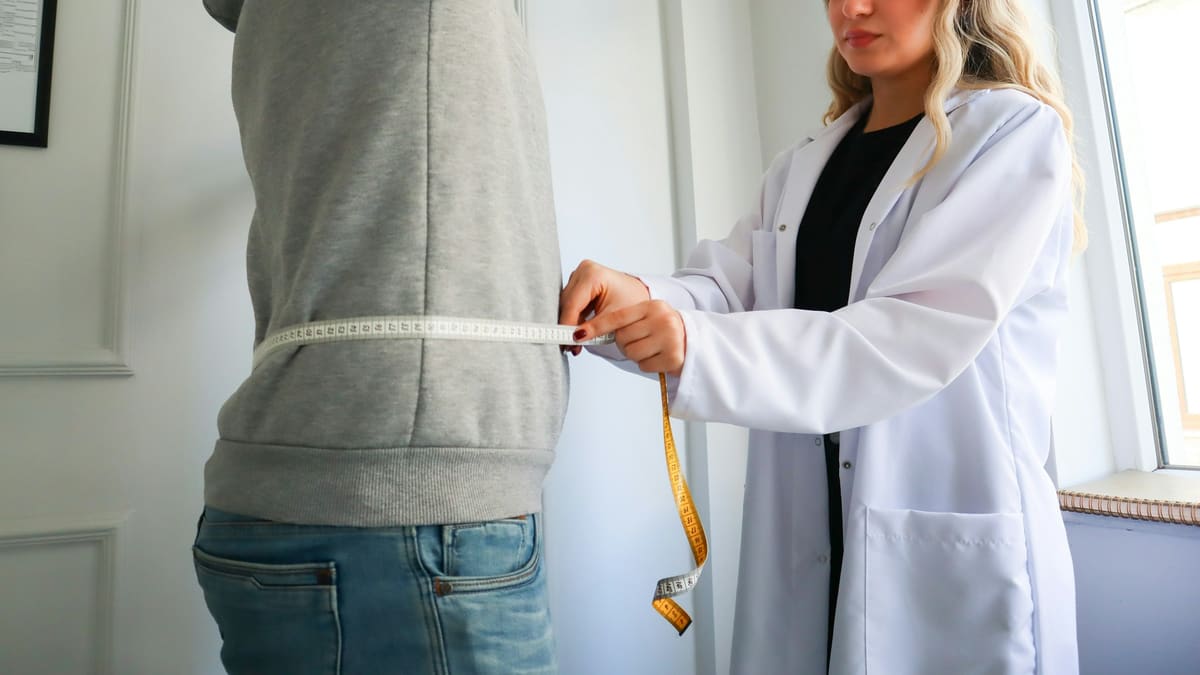
Here's a simple check. The NHS suggests keeping your waist to less than half your height (NHS, obesity). Measure halfway between the bottom of your ribs and the top of your hips, breathe out normally, and compare it with your height.
Why it gets harder after 40
If it feels like your body changed the rules, it did, a little.
From around 30, we slowly lose muscle if we don't train it. The US Office on Women's Health puts it at about 3 to 5% per decade (womenshealth.gov). Less muscle means your body uses a little less energy every day, so the same eating starts to add up.
For women, menopause adds to it. A large US study that followed women through midlife found that fat gain sped up and lean mass started to drop as the transition began, even while the scale only crept up slowly (Greendale et al., JCI Insight, 2019). Many women notice that weight settles around the middle.
Add broken sleep, a busier job and more stress, and it's easy to see why the old approach stops working. It isn't a lack of willpower. The plan just has to change with you.
What actually works
There's no secret here, and that's good news. It's a few simple things, done most weeks, for months.
Eat a little less than you burn. Fat only comes off when your body uses more energy than you give it. The NHS suggests aiming for about 0.5 to 1 kg a week, because that's a pace most people can keep up safely (NHS, losing weight). Not sure where to start? Our free calorie calculator gives you a number to work from.
Lift weights two or three times a week. The NHS recommends strengthening activities on at least two days a week (NHS, activity guidelines). When you eat less, your body can lose muscle along with fat. Strength training gives it a reason to keep the muscle, so what comes off is mostly fat.
Protein at every meal. Eggs, chicken, fish, yoghurt, beans or lentils. Protein keeps you fuller for longer and gives your muscles what they need to recover, which matters even more while you're eating less.
Walk more. The same NHS guidance suggests at least 150 minutes of moderate activity a week. A brisk walk most days gets you there. It's easy to recover from, so it adds up without costing you your strength sessions.
Sleep and stress count too. When you're short on sleep or stretched thin, you're hungrier, you crave quick food and you skip sessions. A regular bedtime and a few minutes to switch off in the evening make every other habit on this list easier.
Plan for the busy week, not the perfect one
This is where most people come unstuck. The plan works on a quiet Monday and falls apart by Thursday.
So we plan for Thursday. Keep two or three easy meals you can make in ten minutes, like eggs on whole wheat toast, a chicken wrap or yoghurt with oats and fruit. Have a fallback takeaway order that still has proper protein in it. And when there's no time for the full session, do a short one. Twenty minutes still counts.
One of my clients put it well: she stopped trying to have a perfect week and started trying to have a decent one, every week. That's when her waist started to move.
What I change first
When someone tells me they want to lose belly fat, I don't add more cardio or cut their food right down. I change three things:
- Two or three strength sessions a week, built around the days they actually have
- Protein at each meal, using food they already eat
- A daily walk, even a short one
Then we track the waist, not just the scale. Muscle and water can make the scale sit still on a good week. A tape measure and how your clothes fit tell you more.
Common questions
Can I lose belly fat in a week?
No, and anything that promises it is selling something. You might feel less bloated in a week, but fat comes off slowly. Give it a few months of steady habits.
Are there foods that burn belly fat?
No single food burns fat. What matters is your total eating over the week, enough protein, and plenty of vegetables and fibre to keep you full.
Do I need to give up carbs?
No. Some people find eating fewer carbs keeps them fuller, and that's fine. But rice, potatoes and bread can fit in a fat loss plan. The portion and the week as a whole matter more than any one food.
Should I see a doctor first?
If you have a health condition, take medication, or your waist is more than half your height, it's worth a chat with your doctor. Training and good food work alongside medical advice, never instead of it.
Where we start
The aim isn't a flat stomach for one photo. It's building a stronger, healthier body that can do the things you want to do for years to come.
If you'd like a plan built for the busy weeks, that's what Boost Go does: my personal training app, with strength sessions at home or in the gym, a short video for every exercise, and a meal plan built around food you already eat.
Try it free for 7 days. Cancel any time. And if you have questions first, message me on WhatsApp on 079 162 9028.
David Thornhill, Boost Fitness, Woodstock, Cape Town
Ready for a plan built around you?
Start my 7 day free trialOn Boost Go. 7 days free, cancel any time.
David Thornhill, Boost Fitness Instagram @david.boostfitness